

MedDoctors are a Medical and Health Department Provider Institutions. Suitable For Healthcare, Medical, Doctor, Dental, Dentist, Pharmacy, Health and any Related Medical Care Field.
14D Street Brooklyn,
New York.


MBBS (KEMH), MD Medicine (LTMMC)
DM Neurology (AIMS, New Delhi), FINR (Stroke & Neurointervention)
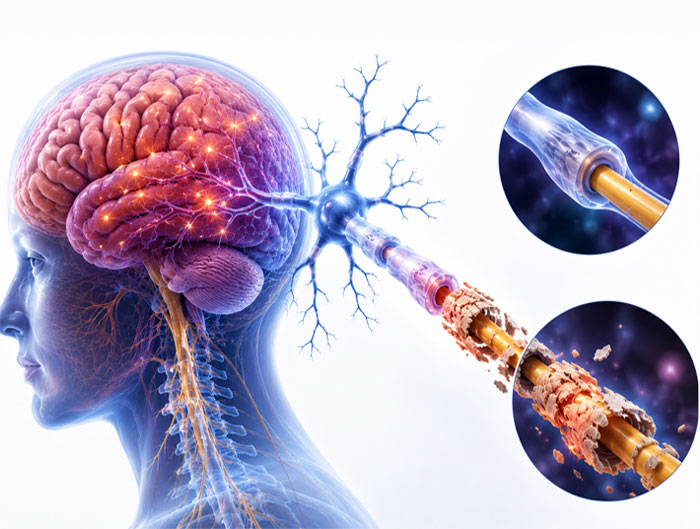
Multiple sclerosis (MS) and other demyelinating disorders affect the myelin sheath that protects nerve fibres in the central nervous system. Damage to myelin can disrupt communication between the brain, spinal cord, and body, causing symptoms such as vision changes, numbness, weakness, fatigue, balance problems, and coordination difficulties. Early neurological evaluation helps guide appropriate treatment.
Demyelinating disorders are conditions in which the myelin sheath, the protective covering around nerve fibres, becomes damaged. When myelin is affected, nerve signals may become slower or interrupted, leading to different neurological symptoms.
Multiple sclerosis is a chronic inflammatory demyelinating disease of the central nervous system. It develops when the immune system mistakenly targets myelin and other components of the nervous system. Other demyelinating disorders can have different causes, patterns of involvement, and treatment approaches, so accurate diagnosis is important.
MS symptoms depend on which areas of the brain, spinal cord, or optic nerves are affected. Some symptoms may come and go, while others can gradually become more persistent.
These symptoms can also occur in many other neurological conditions. Having one or more of these symptoms does not necessarily mean that a person has MS, so proper neurological evaluation is important.
Multiple sclerosis can follow different patterns. Understanding the type of MS helps the neurologist plan appropriate treatment and long-term follow-up.
The course of MS is different for every patient, and regular neurological assessment helps monitor disease activity and treatment response.
Multiple sclerosis is not the only condition that can damage myelin. Several other inflammatory and demyelinating disorders can affect the brain, spinal cord, and optic nerves. These conditions can sometimes produce symptoms similar to MS and require careful evaluation for an accurate diagnosis.
There is no single test that can confirm multiple sclerosis. Diagnosis is based on the patient's medical history, neurological examination, imaging findings, and other investigations. Doctors also need to rule out other conditions that can cause similar symptoms.
Depending on the symptoms and clinical findings, evaluation may include:
MRI of the brain and spinal cord plays an important role in evaluating suspected multiple sclerosis. It can identify areas of inflammation or damage, commonly called lesions, and can help doctors assess disease activity.
MRI findings are considered together with symptoms, neurological examination, and other test results. An MRI alone does not establish an MS diagnosis.
Treatment for MS and other demyelinating disorders depends on the specific diagnosis, disease activity, affected areas of the nervous system, symptoms, and the patient's overall health. The goals may include controlling inflammation, reducing relapses or attacks, preventing further disease activity when appropriate, and managing symptoms.
Depending on the patient's condition, treatment may include:
Some people with MS experience periods when existing symptoms suddenly become worse or new neurological symptoms develop. These episodes are commonly called relapses or attacks.
Treatment depends on the severity of the relapse and may include corticosteroids to reduce inflammation. In selected severe cases that do not respond adequately to steroids, plasma exchange may be considered.
Living with MS often involves more than medicines. Regular physical activity, rehabilitation, adequate rest, symptom management, and ongoing medical follow-up can help patients maintain mobility and independence.
Physiotherapy and occupational therapy may help with movement, balance, muscle stiffness, daily activities, and mobility. Cognitive rehabilitation may also be useful for patients who experience difficulties with memory, concentration, or thinking.
Persistent or unexplained neurological symptoms should be evaluated by a neurologist. This is especially important if you experience repeated episodes of vision changes, numbness, weakness, balance problems, unexplained fatigue, or other neurological symptoms.
Sudden weakness, sudden loss of vision, severe balance problems, facial drooping, or sudden difficulty speaking should be treated as a medical emergency because these symptoms may indicate a stroke rather than MS.
Multiple sclerosis and other demyelinating disorders can affect each person differently. A detailed neurological assessment, supported by appropriate investigations, helps identify the underlying condition and develop an individualized treatment and follow-up plan.
Consult Dr. Abutahir Shaikh for expert evaluation, diagnosis, treatment, and long-term management of Multiple Sclerosis and other brain and spinal cord demyelinating disorders.
Find answers to common questions about Multiple Sclerosis, other demyelinating disorders, symptoms, diagnosis, and treatment.

