

MedDoctors are a Medical and Health Department Provider Institutions. Suitable For Healthcare, Medical, Doctor, Dental, Dentist, Pharmacy, Health and any Related Medical Care Field.
14D Street Brooklyn,
New York.


MBBS (KEMH), MD Medicine (LTMMC)
DM Neurology (AIMS, New Delhi), FINR (Stroke & Neurointervention)
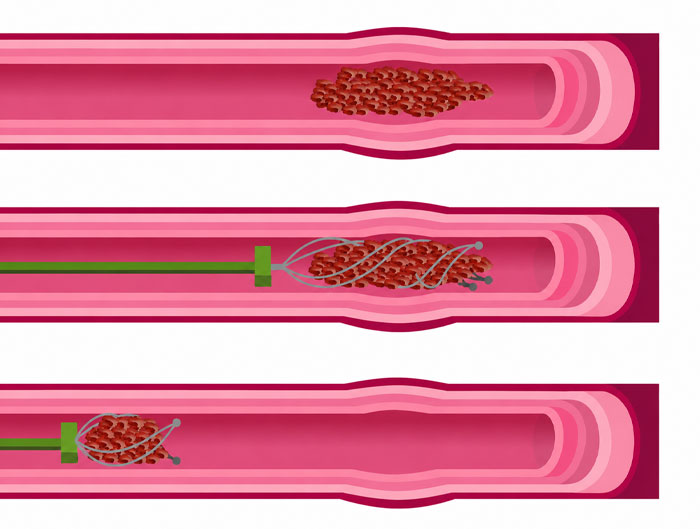
Mechanical thrombectomy is an advanced minimally invasive treatment used to remove a blood clot blocking a major artery of the brain during an ischemic stroke. By restoring blood flow to the brain as quickly as possible, thrombectomy can help limit brain damage and improve the chances of functional recovery in eligible patients.
Dr. Abutahir Shaikh specializes in emergency stroke management and advanced neurointerventional procedures. He provides comprehensive evaluation and treatment for eligible patients with acute ischemic stroke, including mechanical thrombectomy and other endovascular stroke treatments.
Mechanical thrombectomy is a minimally invasive procedure used to physically remove a blood clot from a blocked artery in the brain. It is mainly used for selected patients with an acute ischemic stroke caused by a large vessel blockage.
During the procedure, a thin tube called a catheter is guided through a blood vessel to the blocked artery in the brain. Special devices, such as a stent retriever, and/or suction may then be used to remove the clot and restore blood flow.
An ischemic stroke happens when a blood clot blocks blood flow to part of the brain. Without enough oxygen and nutrients, brain cells can become damaged quickly. Large blood clots may cause severe stroke symptoms and may require urgent endovascular treatment.
Mechanical thrombectomy aims to remove the blockage and restore blood flow to the affected area of the brain. Treatment should be started as quickly as possible when a patient is eligible, because faster restoration of blood flow can improve outcomes.
Mechanical thrombectomy is not required for every stroke patient. It is considered for selected patients after a detailed neurological assessment and brain and blood vessel imaging.
Patients who may be considered for thrombectomy can include those with an acute ischemic stroke caused by a large vessel occlusion, provided they meet the appropriate clinical and imaging criteria. The treatment window can extend to several hours after symptoms begin and, in selected patients, up to 24 hours based on advanced imaging and other eligibility factors.
Recognizing stroke symptoms early is important because emergency treatment may help reduce brain damage. Stroke symptoms usually appear suddenly and may include:
If these symptoms appear suddenly, seek emergency medical attention immediately. Note the time when symptoms started or when the person was last known to be well, as this information can be important for treatment decisions.
Rapid assessment is performed to confirm that the patient has an ischemic stroke and to determine whether a large blood vessel is blocked. Doctors use brain and blood vessel imaging to guide treatment decisions.
Diagnostic evaluation may include:
These tests help identify the location of the blood clot, assess the condition of the brain tissue, and determine whether endovascular treatment may be appropriate.
Mechanical thrombectomy is performed in a specialized neurointerventional or angiography setting. A catheter is carefully guided through an artery toward the blocked blood vessel in the brain.
Once the catheter reaches the area of blockage, a specialized device may be used to capture and remove the blood clot. Suction or aspiration techniques may also be used to help remove the clot. The goal is to restore blood flow to the affected part of the brain as quickly as possible.
A stent retriever is a small mesh-like device designed to capture a blood clot inside a blocked brain artery. The device is delivered through a catheter and expanded within the clot. Once the clot is secured, the device and clot are carefully withdrawn.
Stent retrievers are one of the established technologies used for mechanical clot removal in eligible patients with acute ischemic stroke.
Aspiration thrombectomy uses a specialized catheter to apply suction and remove the blood clot from the blocked artery. Depending on the patient's condition and the location of the blockage, aspiration may be used alone or together with other thrombectomy techniques.
The neurointerventional team selects the most suitable technique based on the location and characteristics of the clot, blood vessel anatomy, imaging findings, and the patient's overall condition.
Some eligible patients with acute ischemic stroke may receive intravenous clot-busting treatment such as alteplase or tenecteplase. Mechanical thrombectomy may also be performed when a large vessel blockage is present and the patient meets the required criteria.
When both treatments are appropriate, intravenous thrombolysis should not be delayed while preparing for thrombectomy. The exact treatment plan depends on the patient's clinical condition, timing, imaging, and eligibility.
For eligible patients, mechanical thrombectomy can rapidly restore blood flow by physically removing a large blood clot from a blocked brain artery. Early treatment can improve the chances of better recovery and may reduce long-term disability.
After the procedure, the patient is closely monitored in a specialized stroke or intensive care setting. Doctors monitor neurological function, blood pressure, breathing, and other important health parameters.
Follow-up brain imaging may be performed to check the treated area and look for complications. Further treatment is then planned based on the cause of the stroke and the patient's recovery.
Recovery after thrombectomy is different for every patient. It depends on the severity of the stroke, the part of the brain affected, how quickly blood flow was restored, and the patient's overall health.
Rehabilitation may be recommended to help patients regain movement, speech, balance, coordination, and independence. Depending on individual needs, rehabilitation may include:
During an ischemic stroke, a blocked blood vessel prevents oxygen-rich blood from reaching part of the brain. The longer the blockage remains, the greater the risk of brain injury. This is why stroke symptoms require immediate emergency evaluation and treatment.
Mechanical thrombectomy should be performed as quickly as possible when a patient is eligible. Some patients may still benefit from treatment later after stroke onset when advanced imaging shows that enough potentially recoverable brain tissue remains.
Mechanical thrombectomy is an emergency stroke treatment and should not be delayed when an eligible patient has a large vessel blockage. If you or someone around you develops sudden facial drooping, weakness, speech difficulty, vision changes, dizziness, or other stroke symptoms, seek emergency medical attention immediately.
Consult Dr. Abutahir Shaikh for expert neurological evaluation, emergency stroke management, and advanced neurointerventional treatment, including mechanical thrombectomy for eligible patients.
Find answers to common questions about mechanical thrombectomy, stroke treatment, eligibility, and recovery.

